
CBRN Gas Masks
CBRN Gas Masks
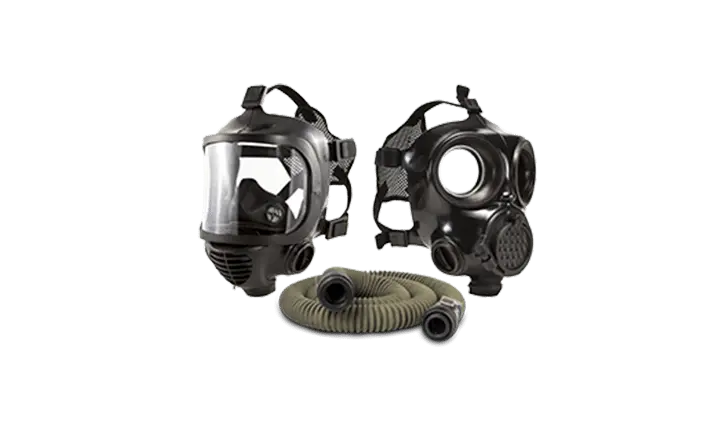
CBRN Gas Masks are personal protective devices designed to protect the user’s face, eyes, and respiratory organs against chemical, biological, radiological, and nuclear threats. When used together with a compatible filtration or respiration system, the mask provides protection against gaseous, vapor, solid, and liquid aerosol agents encountered in hazardous environments.
CBRN Gas Masks
CBRN Gas Masks are designed to provide respiratory and facial protection against CBRN agents and industrial toxic substances. The mask forms a sealed barrier around the face, preventing the inhalation of contaminated air while ensuring visual protection and communication capability during operations.
Deployment Areas
CBRN Gas Masks are deployed in military operations, emergency response missions, industrial facilities, and other environments with potential exposure to hazardous substances. Typical users include military personnel, emergency response teams, firefighters, and industrial workers operating in chemically or biologically risky conditions.
Design and Structural Characteristics
The protective mask is produced in universal dimensions and is suitable for the majority of the adult population. The sealing structure is designed to ensure effective sealing across different face shapes, excluding extremely small face sizes.
The inhalation ports are equipped with Rd 40×1 / 7″ screw thread connections in accordance with EN 148-1 standard, enabling compatibility with NATO-standard filters. The visor provides a wide field of view and is resistant to misting, allowing the use of corrective eyewear underneath.
The mask is designed for user comfort with low breathing resistance, ergonomic fit, and features supporting sweat drainage during physical activity. It is compatible with helmets and other respiratory equipment and includes a talk diaphragm to enable clear communication with or without communication devices.
Test Standards
CBRN Gas Masks are tested and certified according to the following standards:
NIOSH standards for CBRN respiratory protection
CE certification in accordance with Directive 2016/425
MIL-STD-810G for environmental durability testing
EN standards for filtration performance and sealing integrity
These standards ensure performance reliability, durability, and protection effectiveness under operational conditions.
Functional Role
CBRN Gas Masks prevent the inhalation of hazardous gases, vapors, aerosols, and particulate contaminants while protecting the eyes and face from exposure. By maintaining an effective seal and enabling filtered or independent air supply, the mask supports safe operation in environments contaminated by chemical agents, biological pathogens, radioactive particles, and other hazardous substances.