

Triple IR Optical Detector
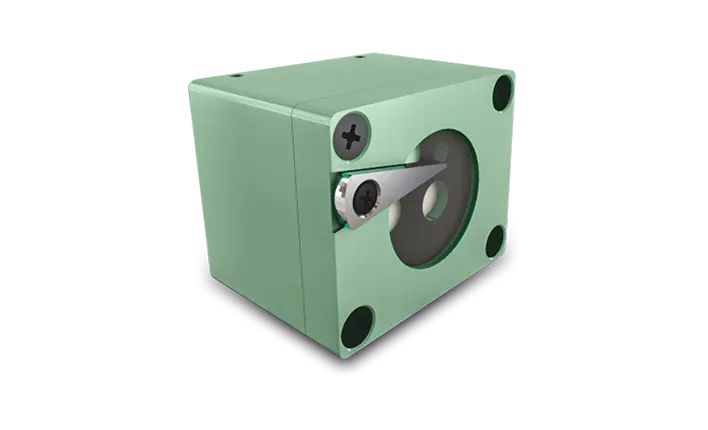
Triple IR Optical Detector
Ultra-fast fire detection is critical in environments where explosive threats, flammable materials, or high-energy impacts can generate fireballs within milliseconds. In military, industrial, and energy-sector applications, delayed detection can lead to catastrophic consequences. The Triple IR Optical Detector developed by Nero Industries is engineered to detect fireballs almost instantly, delivering highly reliable flame detection with exceptional immunity to false alarms in the most demanding conditions.
Triple IR Optical Detector
The Triple IR Optical Detector detects the fireball created when ammunition penetrates armor within 3 milliseconds, before pressure and heat reach destructive levels. Upon detection, it immediately transmits an alarm signal to the vehicle or system control unit, enabling rapid fire suppression response in platforms exposed to RPG and ATGM threats.
Using three independent infrared (IR) wavelength bands, the detector analyzes heat and light signatures at different frequencies. An alarm is generated only when all three IR sensors simultaneously confirm a flame signature, ensuring precise detection and superior false-alarm rejection.
The detector is designed by Nero Industries engineers in accordance with NATO STANAG 4317 and MIL-PRF-62546C standards and has successfully passed extensive environmental testing.
Purpose of the Triple IR Optical Detector
The primary purpose of a Triple IR Optical Detector is early and accurate fire detection in environments where conventional flame or smoke detectors may be ineffective.
By evaluating multiple infrared wavelengths, the detector can:
Identify genuine flame signatures
Distinguish fire from non-fire heat sources
Enable rapid intervention before fire escalation
This makes triple IR technology particularly suitable for high-risk industrial, military, and energy-sector applications.
Designed for Harsh and Mission-Critical Environments
Triple IR Optical Detectors are designed to meet IP67 protection standards, allowing them to remain submerged under 1 meter of water for up to 30 minutes.
They also feature advanced false-alarm immunity, ensuring no reaction to:
Sunlight and solar fluctuations
Vehicle headlights
Welding arcs
Infrared heaters
Cigarette ash
These detectors actively protect engines and crews across armored vehicles, electric vehicles, buses, aircraft, jet aircraft, ships, and industrial facilities. To date, over 40,000 detectors are successfully operating in the field.
Where to Use Triple IR Optical Detectors
Triple IR optical detectors are widely used in fire detection systems across multiple sectors, including:
Armored and military vehicles
Industrial facilities and warehouses
Oil refineries and petrochemical plants
Offshore platforms and pipelines
Marine vessels and shipboard systems
Aircraft and aviation platforms
Commercial buildings and large infrastructures
They are especially effective in high-ceilinged, open, and harsh environments where fast and reliable flame detection is essential.
Types of Triple IR Optical Detectors
Triple IR optical detectors are available in several configurations depending on system requirements:
Conventional Triple IR Detectors
Standard fire detection for industrial and commercial applications.
Microprocessor-Controlled Triple IR Detectors
Enhanced sensitivity and advanced signal processing for high-risk facilities.
Addressable Triple IR Detectors
Used in large systems where precise detector identification is required.
Linear Triple IR Detectors
Designed for long-distance fire detection and fire location identification.
Multi-Sensor Triple IR Detectors
Combined with secondary sensors for increased detection accuracy.
Key Features of Triple IR Optical Detectors
Triple-Wavelength IR Detection: IR1 (4.5–5.5 μm), IR2 (3.0–3.6 μm), IR3 (0.8–1.2 μm)
Ultra-Fast Response Time: Millisecond-level fire detection
High Sensitivity: Detects small and low-intensity flames
Wide Coverage Area: Large volumetric detection cone
Low False Alarm Rate: All three IR sensors must confirm flame presence
Durable Construction: Designed for harsh environmental conditions
Easy Installation: Suitable for diverse applications
The detector uses ultra-fast semiconductor IR quantum sensors and two high-performance microprocessors, supported by advanced software algorithms to maximize detection accuracy and reliability.
Advanced Performance Capabilities
Detection Range: Over 60 meters in high-sensitivity mode
Fire Reference: Detects a 0.1 m² heptane fire within seconds
Communication: ModBus RS-485, analog output, and relay interfaces
Visual Indicators:
Green – Energized
Red – Alarm
Yellow – Fault/Error
The volumetric coverage of the detector is significantly higher than many conventional IR3 detectors on the market.
Main Assets of the Triple IR Optical Detector
Suitable for hydrocarbon fires (petrol, methane, diesel, LPG)
Effective for paper, wood, and solvent fires
Strong immunity to arc welding, heat radiation, and sunlight
FM Approved, ATEX Certified, CE Marked
Compatible with SIL 2 safety requirements
Typical Application Areas
Oil refineries and processing facilities
Offshore platforms and oil & gas pipelines
LNG / LPG loading and unloading stations
Ethanol and methanol storage facilities
Paint and solvent storage areas
Testing Standards and Certifications
Triple IR Optical Detectors are tested and evaluated according to internationally recognized standards, including:
EN 54-22 – European fire alarm systems
UL 268 – Fire detection performance testing
FM Approval Standards – Industrial fire protection
ISO 7240-24 – International fire detection systems
These standards ensure detector reliability, environmental durability, and performance accuracy.
What Does a Triple IR Optical Detector Do?
Triple IR optical detectors continuously monitor infrared radiation across multiple wavelengths to detect fire at the earliest possible stage.
Their core functions include:
Early flame detection
Rapid alarm signaling
Reduction of false alarms
Protection of personnel, equipment, and infrastructure
They are an essential component of modern fire detection systems in industrial, military, and energy-sector applications.